How AI Task Decomposition Works and Why It Changes Everything
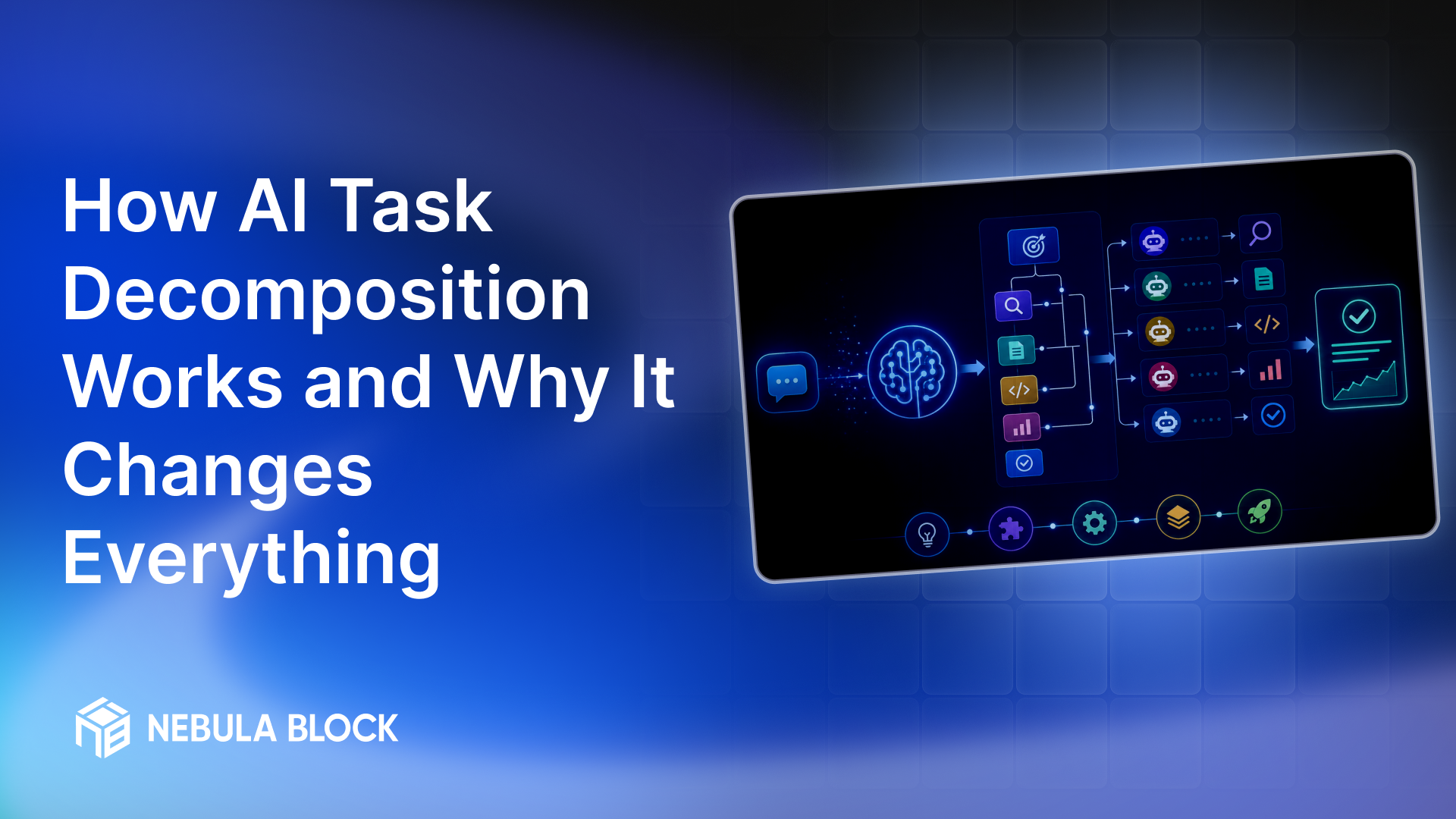
If you input a single prompt into a Large Language Model asking it to "Build a fully compliant, production-ready enterprise billing application," the result will almost certainly disappoint. You will likely receive generic, incomplete code blocks, missed edge cases, and architectural oversights.
Yet, if you break that massive goal into discrete micro-prompts—asking the model to design a database schema, write an invoice validation function, construct an API endpoint, and build unit tests sequentially—the quality of the output increases exponentially.
This contrast reveals the foundational bottleneck of modern Generative AI: LLMs struggle with complex, long-horizon objectives, but excel at granular, tightly scoped tasks.
The architectural engine bridging human intent and AI execution is Task Decomposition.
What is AI Task Decomposition?
Task Decomposition is the algorithmic process of breaking a complex, high-level goal down into smaller, self-contained sub-tasks that can be planned, executed, evaluated, and recombined by AI models.
Instead of treating an LLM like a black box that jumps straight from input to final answer, Task Decomposition introduces a structured orchestration pipeline:
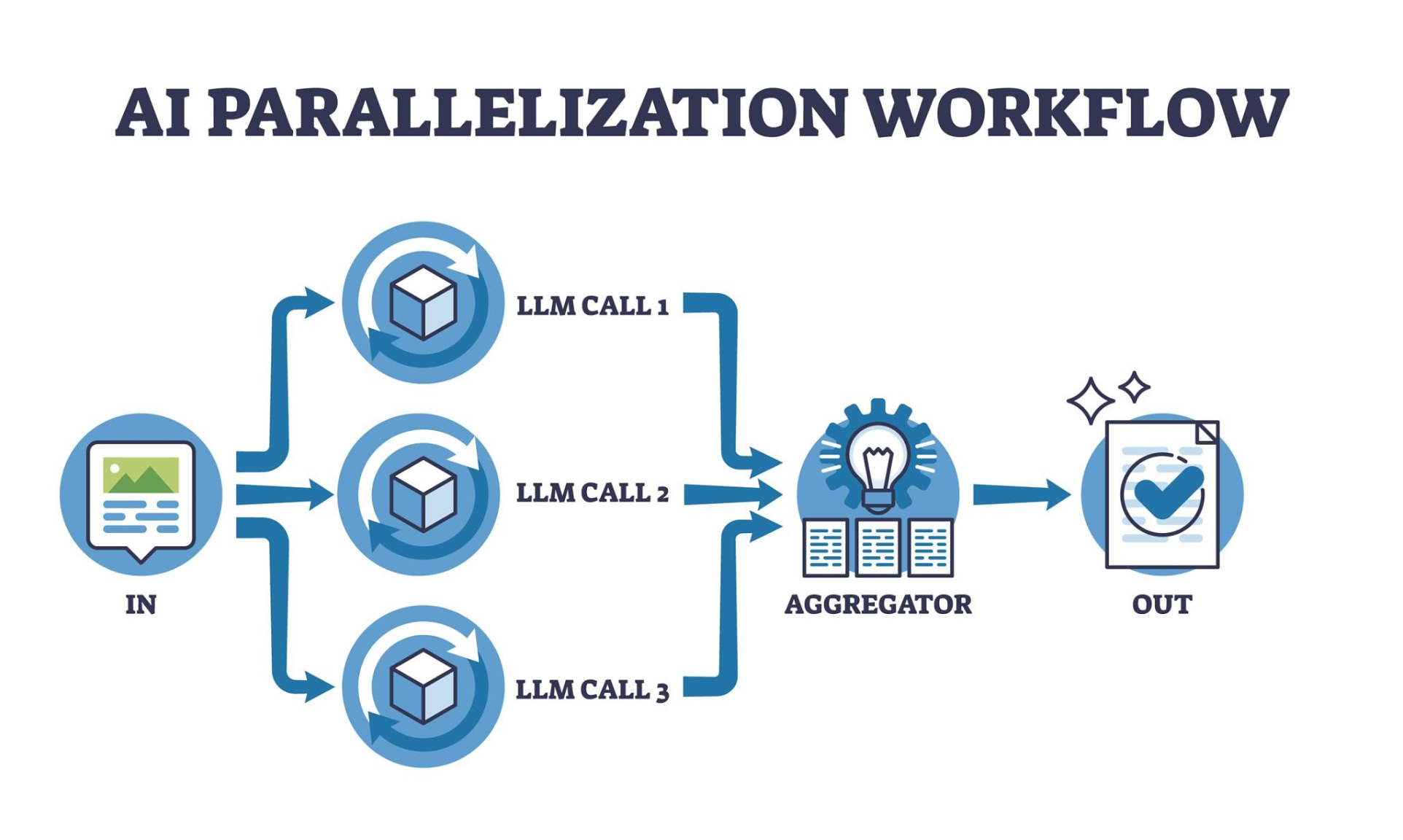
Instead of treating an LLM like a black box that jumps straight from input to final answer, Task Decomposition introduces a structured orchestration pipeline:
- Stage 1: High-Level Goal — Input complex intent (e.g., "Audit repository for security risks").
- Stage 2: Decomposition Planner — Breaks the global objective into dependent or parallel micro-tasks.
- Stage 3: Parallel Sub-Task Execution — Executes granular jobs independently:
- Sub-Task 1: Fetch Repository AST
- Sub-Task 2: Cross-check OWASP Top 10 vulnerabilities
- Sub-Task 3: Draft automated remediation PRs
- Stage 4: Synthesis & Fact-Check — Aggregates and validates results into a single production-ready deliverable.
The 3 Core Methods of Task Decomposition
Depending on the scale and unpredictability of the workflow, AI systems decompose tasks using three primary methodologies:
1. Chain-of-Thought (CoT) & Tree-of-Thoughts (ToT)
For tasks involving logical reasoning or mathematics, decomposition happens internally within the prompt cycle:
- Chain-of-Thought: The model is explicitly prompted to express its step-by-step reasoning sequentially (A > B > C > Output) before producing a final answer.
- Tree-of-Thoughts: The model generates multiple candidate paths at each step, evaluating potential branch outcomes before choosing the optimal route forward.
2. Hierarchical Planning (Manager-Worker Pattern)
For enterprise automation, multi-agent frameworks use hierarchical planning:
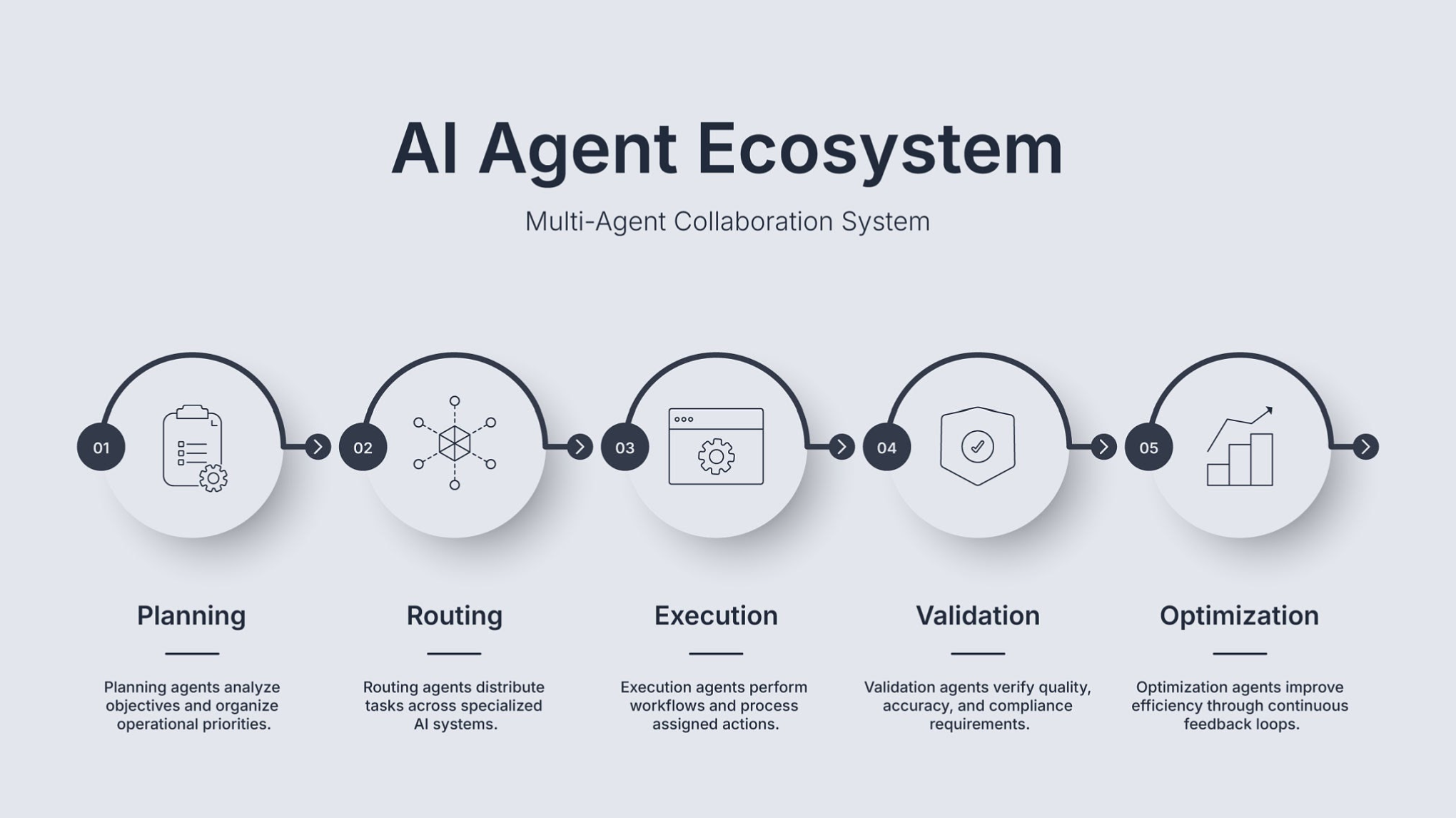
- The Planner Agent: Analyzes the global goal and outputs a structured graph of dependent sub-tasks (a Directed Acyclic Graph, or DAG).
- The Worker Agents: Specialized agents execute individual sub-tasks independently.
- The Evaluator Agent: Inspects worker outputs against strict criteria before permitting the framework to pass data to the next step.
3. Dynamic Re-Planning
In real-world environments, plans rarely survive first contact with live systems. Dynamic re-planning allows an agent to adjust its execution graph based on real-time feedback:
- Plan: Query API endpoint A.
- Execution Result: Endpoint A returns a
404 Not Founderror. - Re-Planning Step: The agent interrupts the chain, creates a new sub-task to query backup Endpoint B, updates its internal memory, and resumes execution seamlessly.
Why Task Decomposition Changes Everything for Enterprise AI
Task Decomposition is not just a clever prompt engineering trick; it represents a fundamental paradigm shift in how software engineering and AI architectures interact.
1. Massive Reduction in Hallucinations
Hallucinations occur when an LLM is forced to bridge large conceptual gaps without sufficient context or logical guardrails. By constraining a model's focus to a single sub-task with explicit inputs and outputs, the search space for error shrinks dramatically.
2. Granular Observability and Debuggability
When a legacy single-prompt system fails, identifying why it failed is nearly impossible. With Task Decomposition, system administrators gain step-by-step visibility into execution pipelines:
"The automated software migration failed at Step 3 (Database Schema Normalization) due to a type mismatch, while Steps 1, 2, and 4 executed perfectly."
This precision allows developers to patch individual agents or prompts without redesigning the entire workflow.
3. Model Optimization: Speed, Cost, and Efficiency
Not every step in a complex workflow requires a high-cost, high-latency frontier reasoning model. Task Decomposition allows systems to route sub-tasks to the most efficient model for the job:
| Execution Layer | Target Sub-Task | Assigned Model Tier | Cost & Speed Impact |
| Reasoning & Planning | High-level architecture, strategy & orchestration | Frontier Model (e.g., Claude 3.5 / GPT-4o) | High capability, used strictly where needed |
| Formatting & Extraction | JSON parsing, schema validation, text synthesis | Lightweight Model (e.g., Llama 3 8B / Flash) | Ultra-fast execution at ~90% lower cost |
| Deterministic Data Ops | API calls, AST extraction, database queries | Code Script / Tool (Python / Node.js) | Zero LLM token cost, instant execution |
This hybrid approach reduces operational API costs and latency dramatically while maintaining maximum output quality.
Conclusion
The future of AI automation lies not in waiting for a single, magical "super-model" that can solve any complex prompt instantly. It lies in building intelligent, modular orchestration systems that decompose large human ambitions into well-defined, executable steps—turning chaotic goals into reliable software engines.
Learn more at
- Email: contact@nebulablock.com
- Website: nebulablock.com
- Docs: docs.nebulablock.com
- Book a call: nebulablock.com/contact